

Science MagazineEvolving Immunity
This illustration depicts the changes in the immune system throughout an individual’s life span, from infancy to childhood, adulthood, and older age. The infant silhouette contains DNA, and the figures are enveloped by the nuclear and plasma membranes. These components reference the evolution of immunity over millennia, as viruses integrated into the genome and as life progressed from single-celled to multicellular organisms.
All references for molecules and proteins were sourced from the Protein Data Bank and positioned in Blender. Inspiration is drawn from 1960s San Francisco psychedelic posters, in particular those produced by the Fillmore.
Art direction by Chrystal Smith.
The child silhouette show a high number of naive B and T cells.
The adult silhouette shows the individualized immune profile which develops from genetic, hormonal, microbial, and environmental factors (molecular models of estrogen and testosterone, gut microbiota such as B. longum, and pathogens such as E. coli are included).
The “bend, not break" strategy of balancing adaptive and innate responses to continuously update defenses is represented by the presence of both adaptive (mature lymphocytes and antibodies) alongside innate (neutrophils) immune cells.
The silhouette of the elderly figure show chronic low-grade inflammation and immunosenescence, including remodeling of T-cell immunity (functional impairment of older naive T cells) and macrophages shift from anti-inflammatory to pro-inflammatory profiles.
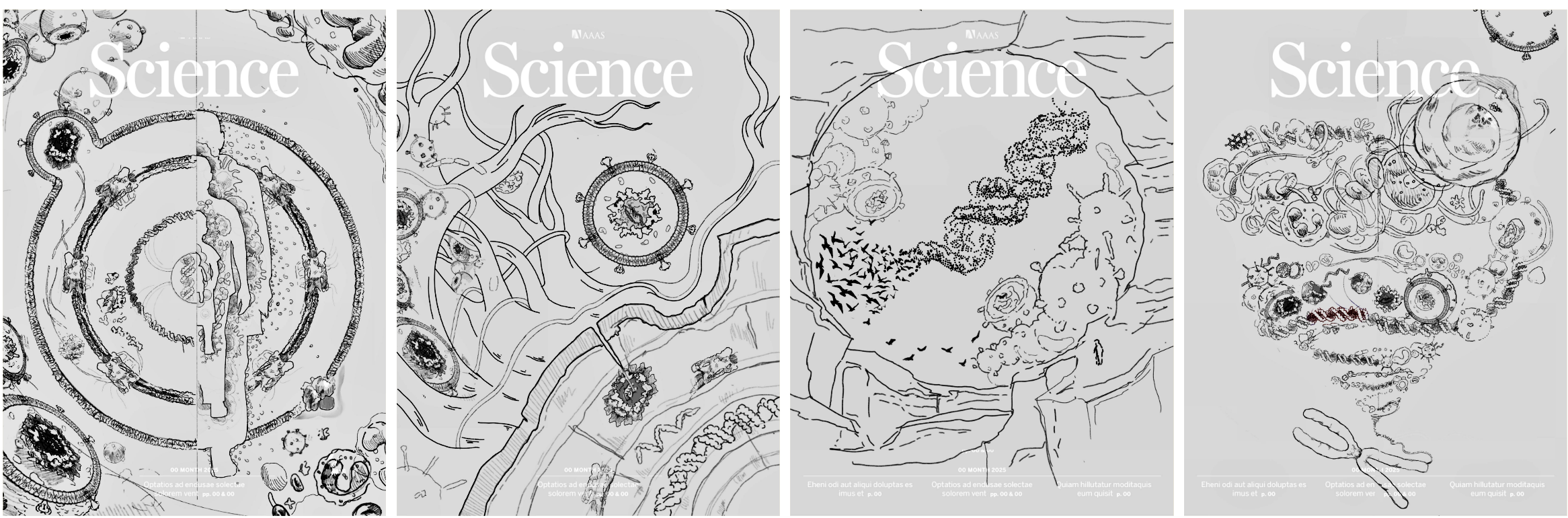
Concept Breakdown
Sketch Variations
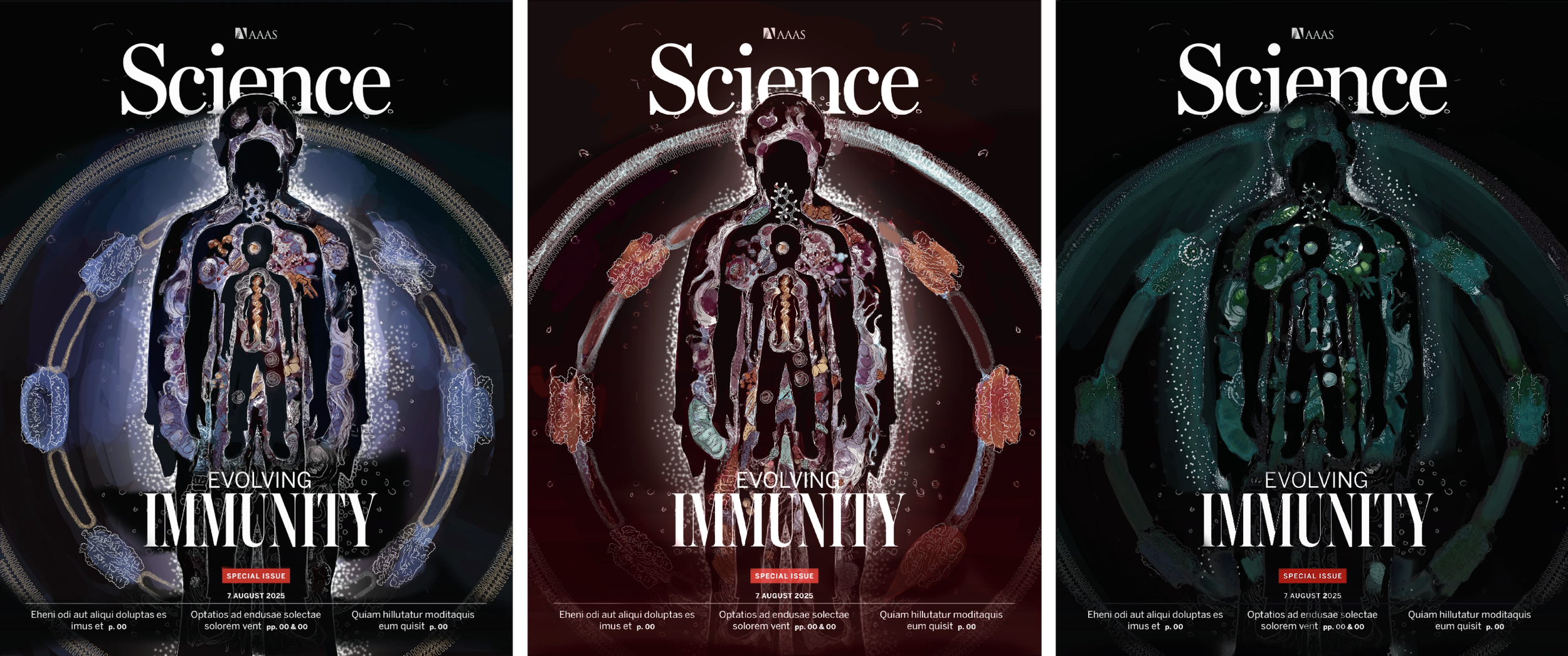
Color Variations